International Competitiveness and Adjustment Policies
Enrichment and application
Detailed competitiveness frameworks, trade-pattern analysis, terms-of-trade movements and the Future Economy strategy are not separate detailed Theme 3.3 requirements. They are retained to support disciplined application and evaluation.
Meaning
International competitiveness is an economy’s ability to supply goods and services that succeed in international markets while supporting rising real incomes over time.
It is not synonymous with low wages, a weak currency, more exports, a trade surplus or a single ranking. An economy can export more because foreign demand is temporarily strong while productivity stagnates; it can run a trade deficit while importing productive capital.
Price and non-price competitiveness
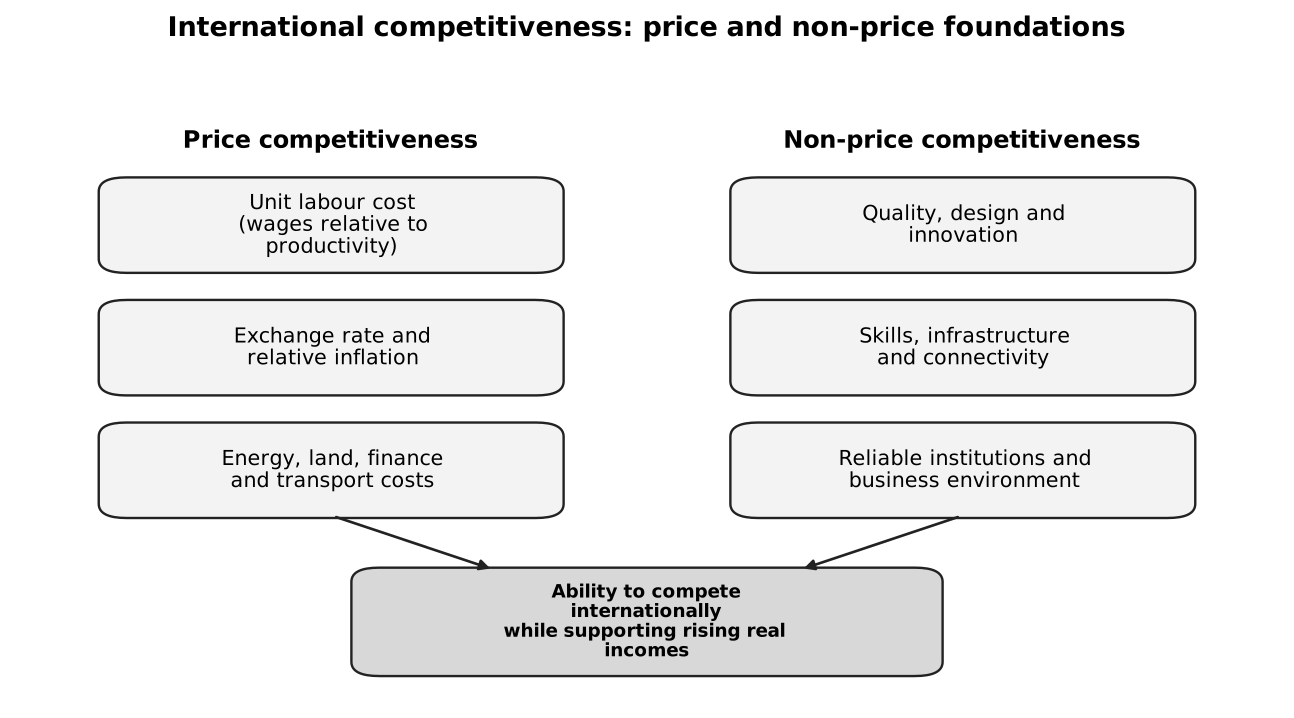
Caption: Price competitiveness depends on unit costs, the exchange rate, relative inflation and other business costs. Non-price competitiveness depends on quality, innovation, skills, connectivity and reliable institutions. The two columns converge because sustainable success requires an attractive price-quality proposition and capacity to generate rising real income, not price cutting alone.
Unit labour cost
Wages matter relative to productivity:
If wages rise by but labour productivity rises by , unit labour cost tends to fall, other things equal. A high-wage economy can therefore remain price competitive when workers create sufficiently high value.
Other price factors include energy, land, finance, transport, indirect taxes, subsidies, the nominal exchange rate and inflation relative to trading partners.
Non-price competitiveness
Firms compete through quality, reliability, design, branding, after-sales service, innovation, delivery time and differentiation. These features can make demand less price-elastic and sustain higher value added.
Economy-wide foundations include adaptable skills, infrastructure, digital connectivity, research systems, legal certainty, finance, competition and international links.
Keep four indicators separate
| Concept | What it measures | Why it can move differently |
|---|---|---|
| Export volume/value | foreign sales | affected by foreign income, prices and product mix |
| Trade balance | export revenue minus import expenditure | affected by both export and import prices/quantities |
| Terms of trade | export-price index relative to import-price index | a price ratio, not a quantity or balance |
| Competitiveness | capacity for sustained international success and real-income growth | includes productivity and non-price capability |
Trade patterns
A trade pattern describes what, how much and with whom an economy trades. It changes with comparative advantage, factor endowments, preferences, product cycles, exchange rates, world growth, transport cost, agreements and MNC networks.
Singapore illustrates a small open hub: high trade intensity, imported intermediate inputs, services and entrepôt activity, strong connectivity and continued movement toward higher-value activities. This description should not become a claim that every high-value sector must be domestically owned or that all upgrading succeeds.
Enrichment: terms of trade
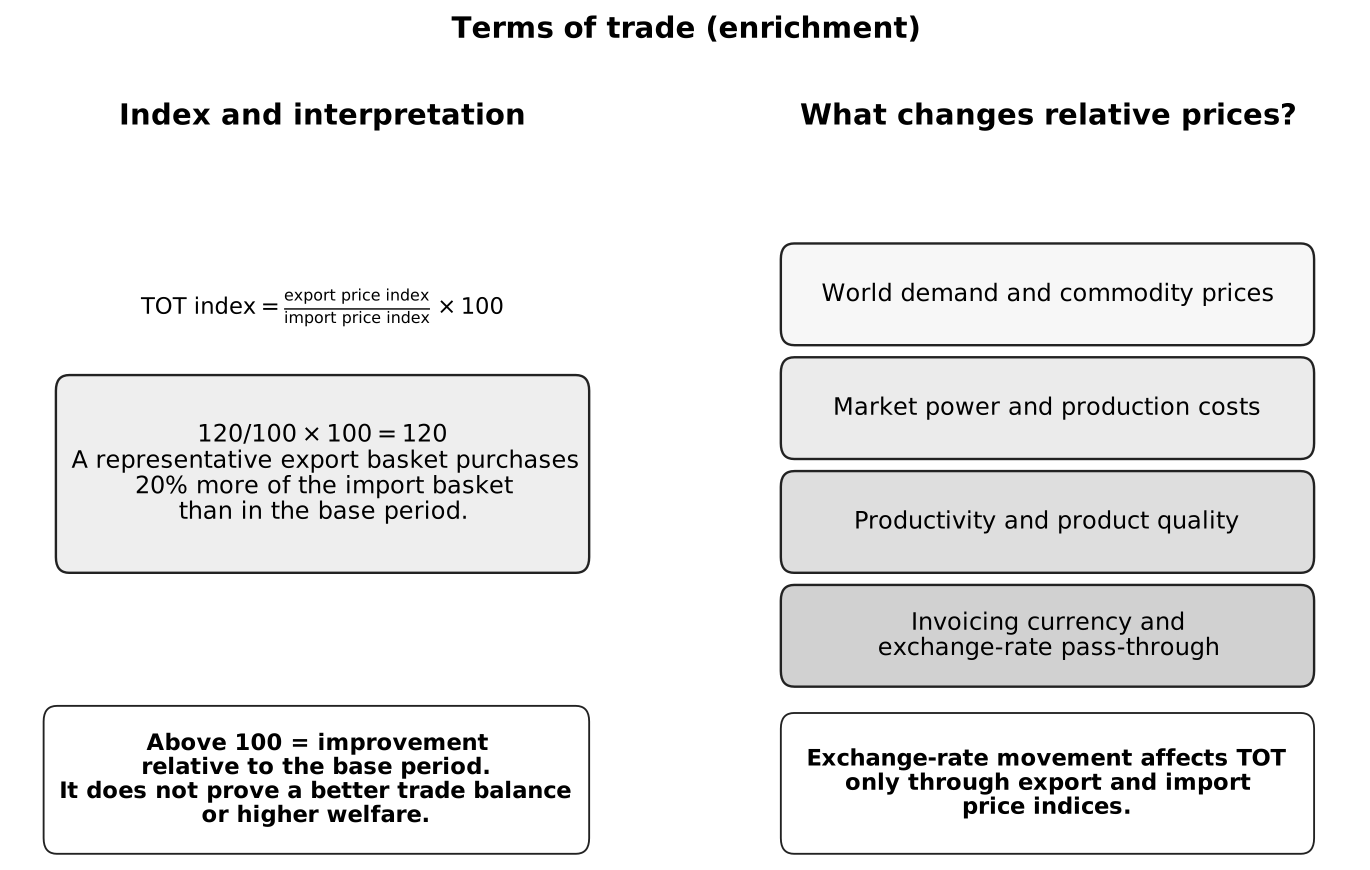
Caption: The formula compares export and import price indices. An index of means export prices are higher relative to import prices than in the base period, not that exports or welfare rose by . The determinant boxes show why world demand, commodity prices, market power, cost, quality and invoicing/pass-through can change the ratio.
An appreciation improves the measured terms of trade only if it lowers the import-price index relative to the export-price index; invoicing and pass-through matter. The same appreciation can weaken export price competitiveness. Conversely, depreciation can worsen terms of trade while eventually improving net exports. Keep the mechanisms separate.
Diagnose before choosing policy
| Constraint | More direct policy route | Main lag or risk |
|---|---|---|
| skill mismatch | employer-linked training, matching and mobility support | training may not match vacancies; workers need transition support |
| weak productivity/technology | R&D, digital adoption, competition and finance | government information failure; benefits may be captured privately |
| infrastructure bottleneck | transport, energy and digital investment | long gestation, construction cost and poor project selection |
| excessive domestic inflation | credible macroeconomic stabilisation | demand restraint can reduce output and jobs in the short run |
| concentrated supply risk | supplier/market diversification, stocks and interoperability | duplication and inventory carrying cost |
| concentrated adjustment loss | temporary income support and active labour policy | poorly designed aid may preserve obsolete activity |
Main adjustment channels
Skills and mobility
Education, career conversion, labour-market information and relocation support reduce structural unemployment only when new skills match credible demand and workers can complete the transition.
Enterprise, technology and innovation
Research support, digital adoption, finance and competition can improve productivity and non-price competitiveness. Support should be transparent, time-limited and evaluated because governments cannot perfectly identify future winners.
Infrastructure and connectivity
Ports, airports, energy networks, broadband and cross-border standards reduce transaction cost. Benefits require utilisation and complementary private investment and skills.
Macroeconomic and exchange-rate stability
Stable prices prevent domestic cost escalation. Depreciation may give price relief to exporters but raises imported costs and cannot substitute indefinitely for productivity. For Singapore, exchange-rate-centred monetary policy also affects imported inflation.
Social protection and resilience
Targeted transfers and unemployment support share adjustment costs while allowing resources to move. Resilience policies manage concentration and recovery; they do not attempt expensive complete self-sufficiency.
Enrichment application: Singapore Future Economy strategy
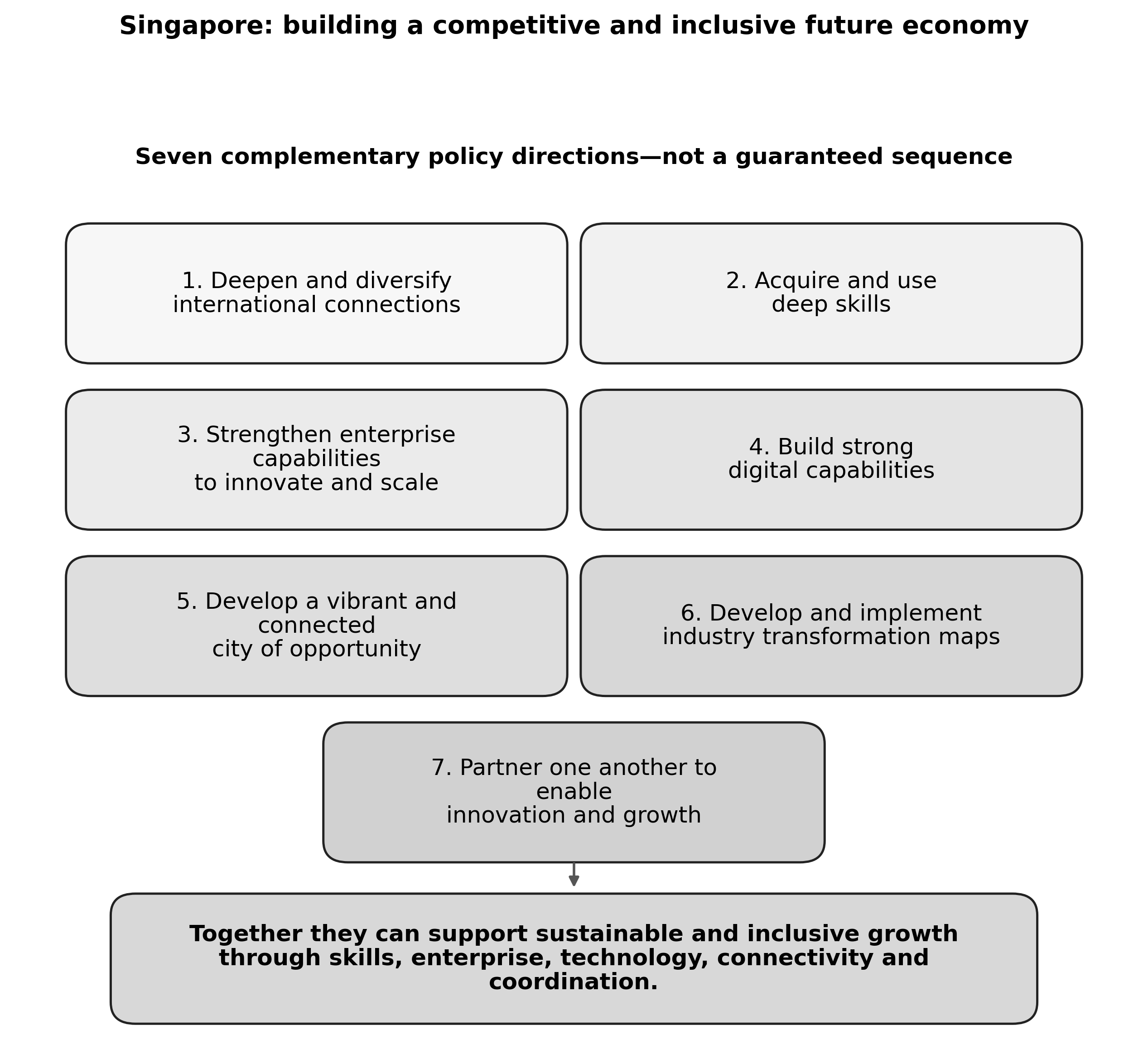
Caption: Seven strategy boxes point toward one central outcome to show complementarity, not certainty. Skills have greater return when firms innovate; innovation has greater return when finance, data, infrastructure and markets are accessible; international openness is more durable when workers can adjust and gains are broadly shared. The footer summarises the combined productivity, resilience and competitiveness channel.
No single box guarantees the outcome. Implementation capacity, global demand, firm response, distribution and fiscal opportunity cost determine effectiveness.
Worked policy-package logic
Suppose automation and import competition displace routine workers.
- Temporary income support stabilises consumption and permits job search.
- Employer-linked training builds skills demanded in expanding activities.
- Matching, transport and housing assistance connect workers to vacancies.
- Innovation and investment policy expands demand for new capabilities.
- Competition and performance review prevent permanent subsidy dependence.
This package is stronger than a tariff alone because it addresses immobility and productivity while preserving useful competitive signals.
Evaluation questions
- Does the policy raise productivity or merely lower private cost through subsidy?
- What is the binding constraint?
- Are benefits diffused through suppliers, workers and consumers?
- How long is the lag and who bears transition cost?
- Can smaller firms and vulnerable workers participate?
- What government failure and fiscal opportunity cost arise?
- Does resilience improve without excessive duplication?
Common pitfalls
- Using “more exports” as the definition of competitiveness.
- Treating wages rather than unit labour cost as decisive.
- Ignoring imported inputs when recommending depreciation.
- Listing supply-side policies without a productivity channel.
- Treating training as instant job creation.
- Treating terms of trade, trade balance and competitiveness as interchangeable.
- Treating resilience as self-sufficiency.
Return to Globalisation and the International Economy.