Protectionism and Trade Policy
Scope
Core coverage includes benefits and costs of protectionism, tariffs and non-tariff measures, plus tariff diagram analysis. Detailed quota/subsidy diagrams, Marshall-Lerner, the J-curve and two-country export-ban analysis are enrichment.
Meaning and instruments
Protectionism is government action that restricts imports or assists domestic suppliers relative to foreign suppliers. Each instrument creates a different wedge:
| Instrument | Direct mechanism | First learner’s key question |
|---|---|---|
| Tariff | tax raises the domestic price of imports | how do consumption, domestic output, imports, revenue and welfare change? |
| Import quota/licence | fixes the maximum imported quantity | who receives the scarcity rent? |
| Production/export subsidy | lowers producers’ effective cost or raises receipts | what output is encouraged and who finances it? |
| Exchange control | restricts access to foreign currency | which imports or payments are rationed? |
| Regulation/procurement rule | raises compliance cost or favours domestic supply | is the rule correcting a genuine risk or disguising protection? |
| Voluntary export restraint | exporter limits sales, often under pressure | do foreign exporters capture the rent? |
| Export ban/embargo | prohibits selected exports/imports or trade | how are domestic and partner prices and output affected? |
The tariff diagram, coordinate by coordinate
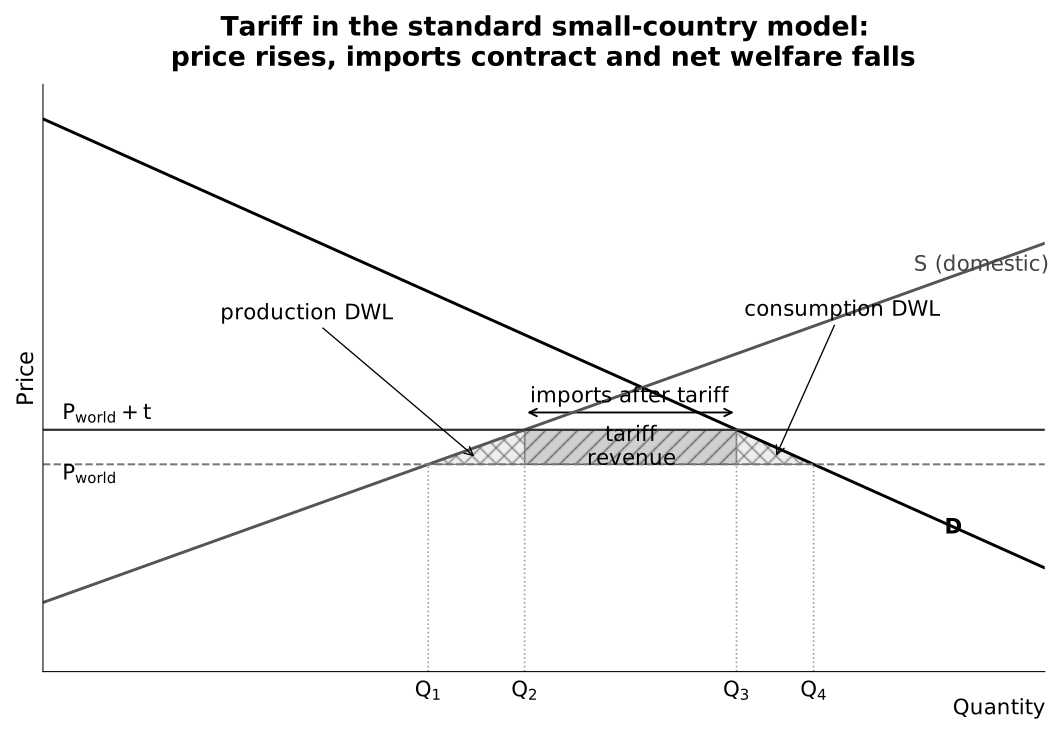
Caption: Under the small-country assumption, foreign supply remains available at . A tariff raises the domestic price to . Domestic output rises from to , consumption falls from to , and imports contract from to . The hatched rectangle equals tariff per unit multiplied by post-tariff imports and accrues to government. The left triangle is production deadweight loss; the right triangle is consumption deadweight loss.
Why the revenue rectangle is not a net gain
Tariff payments leave importers/consumers and enter the government budget. This changes who holds purchasing power; it does not create resources. Government may spend the revenue usefully, but the revenue itself is a transfer, not extra national welfare.
Why the two triangles are net losses
- Production loss: units between and are produced domestically even though their marginal domestic resource cost exceeds . Importing them would use fewer world resources.
- Consumption loss: units between and are no longer consumed even though consumers’ willingness to pay exceeds . Mutually beneficial trades disappear because the tariff raises the private price.
The diagram omits externalities and assumes perfect competition. If imports generate an external cost or production creates a genuine learning benefit, the uncorrected free-trade allocation may not be socially optimal—but a tariff is still not automatically the best instrument.
Import quotas
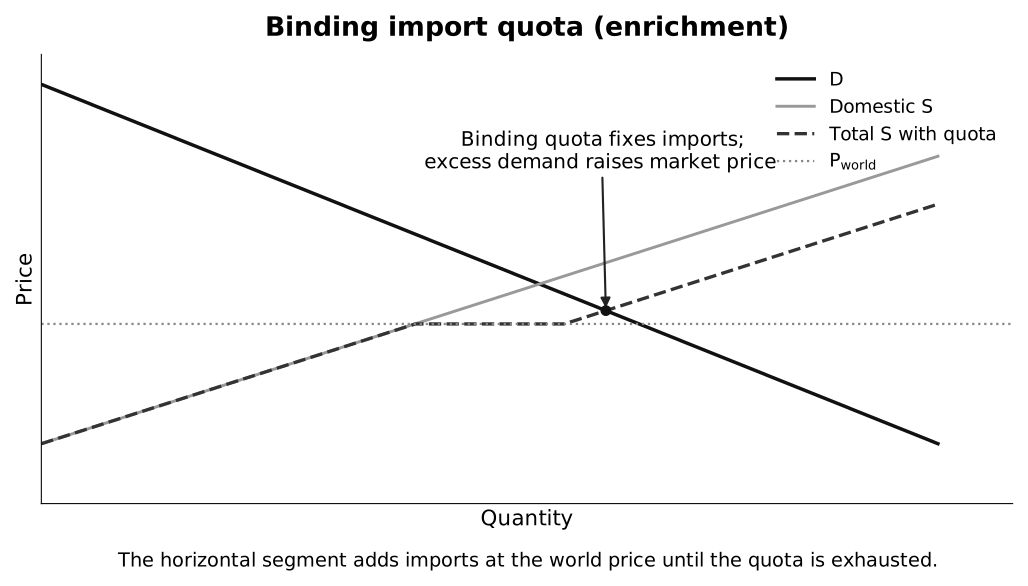
Caption: Enrichment total-supply construction. At , imports can initially fill the gap. Once the quota quantity is exhausted, total market supply follows domestic supply shifted horizontally right by the permitted import quantity. Demand intersects this post-quota segment at a price above . The upward arrow is therefore a market-clearing price response to a binding quantity limit, not an arbitrary price set by government.
A quota can resemble a tariff in price and quantity effects, but the quota rent depends on licence allocation:
- auctioned licences generate government revenue;
- free domestic licences give rent to licence holders;
- a voluntary export restraint may let foreign exporters capture it.
Because a quota fixes quantity, stronger demand raises price instead of allowing more imports. This makes quotas less flexible and can intensify lobbying for licences.
Production subsidies
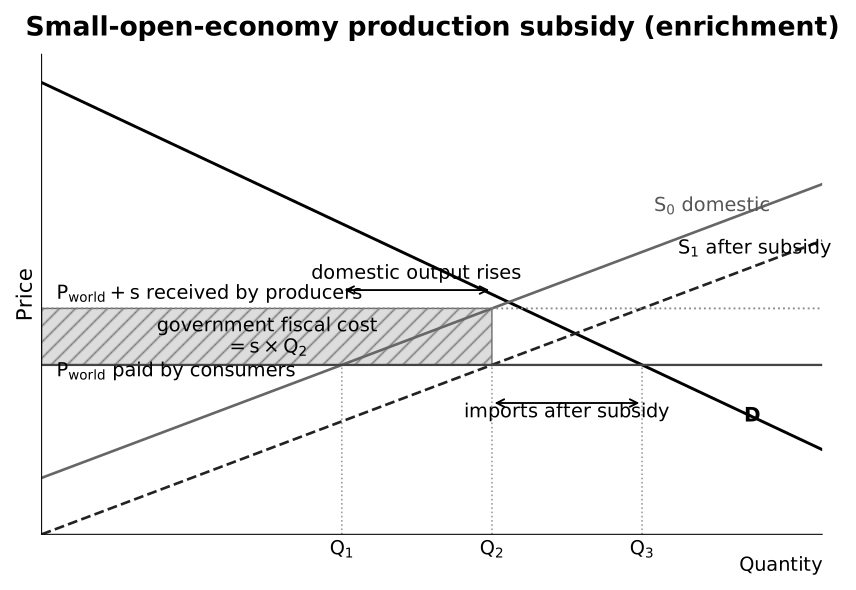
Caption: Enrichment small-open-economy model. Consumers continue paying and demand remains . Producers receive , so domestic output rises from to and imports fall from to . The shaded rectangle is government fiscal cost, not producer revenue created from nothing. The policy assists output without directly raising the consumer price but still has opportunity and efficiency costs.
A targeted subsidy may support learning or strategic capacity more directly than a tariff, yet it requires public finance, may sustain inefficient firms and can provoke countervailing duties.
Arguments for protection: claim, condition and risk
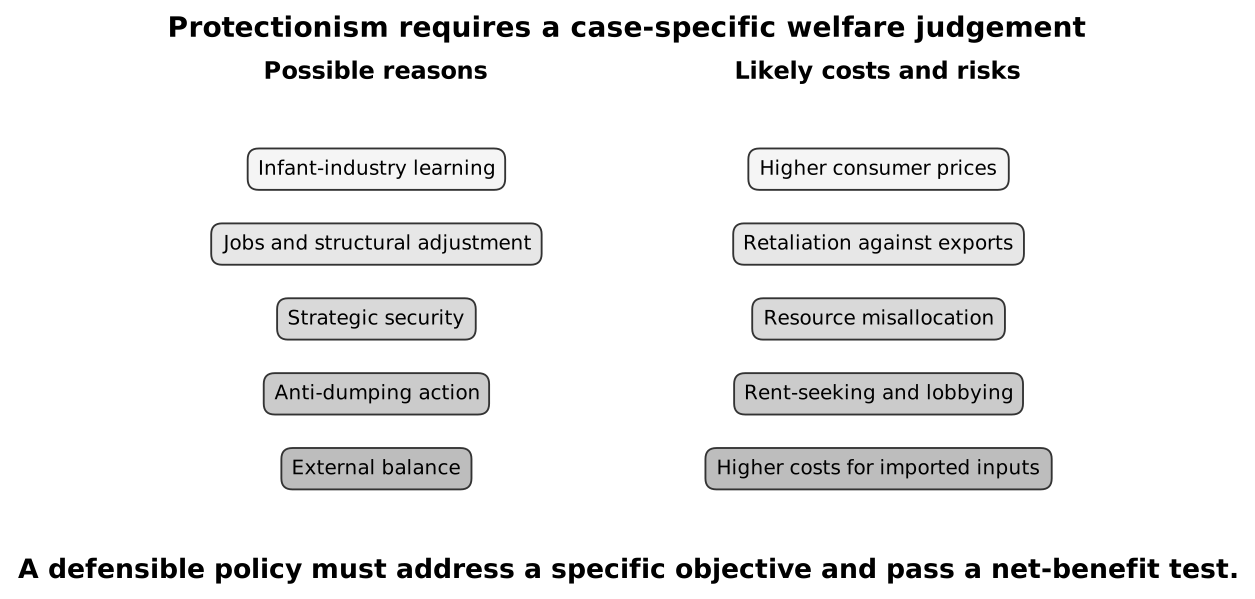
Caption: The left column lists possible objectives, not automatic justifications. The right column lists predictable costs. A defensible policy must identify the specific failure or vulnerability, show that the instrument addresses it, and demonstrate that expected benefits exceed consumer, fiscal, efficiency, input-cost, lobbying and retaliation risks.
| Claim | Necessary condition | Main risk or alternative |
|---|---|---|
| Infant industry | learning/scale creates future competitiveness and support can end | permanent dependence; use performance-tested, time-limited support |
| Structural adjustment/jobs | rapid decline creates unusually high transition cost | preserving obsolete activity; support workers and mobility directly |
| National security | concentrated foreign supply creates serious disruption cost | vague security claims; diversify suppliers or hold strategic stocks |
| Anti-dumping | unfair pricing and material injury are demonstrated | normal low-cost competition mistaken for dumping |
| External balance/employment | spare capacity and domestic substitutes allow and AD to rise | imported inputs, retaliation or appreciation offset the effect |
| Environmental/labour standards | a genuine external cost or regulatory gap exists | disguised protection; price/regulate the externality directly |
| Low-wage competition | low unit cost reflects distortion rather than productivity | wages alone are misleading; compare unit labour cost |
Macroeconomic transmission
If a restriction lowers import expenditure:
The word may matters. The result is stronger with spare capacity and available domestic substitutes. It is weakened when domestic supply is inelastic, imported inputs are essential, partners retaliate, domestic costs rise, or the exchange rate appreciates.
Retaliation and collective-action failure
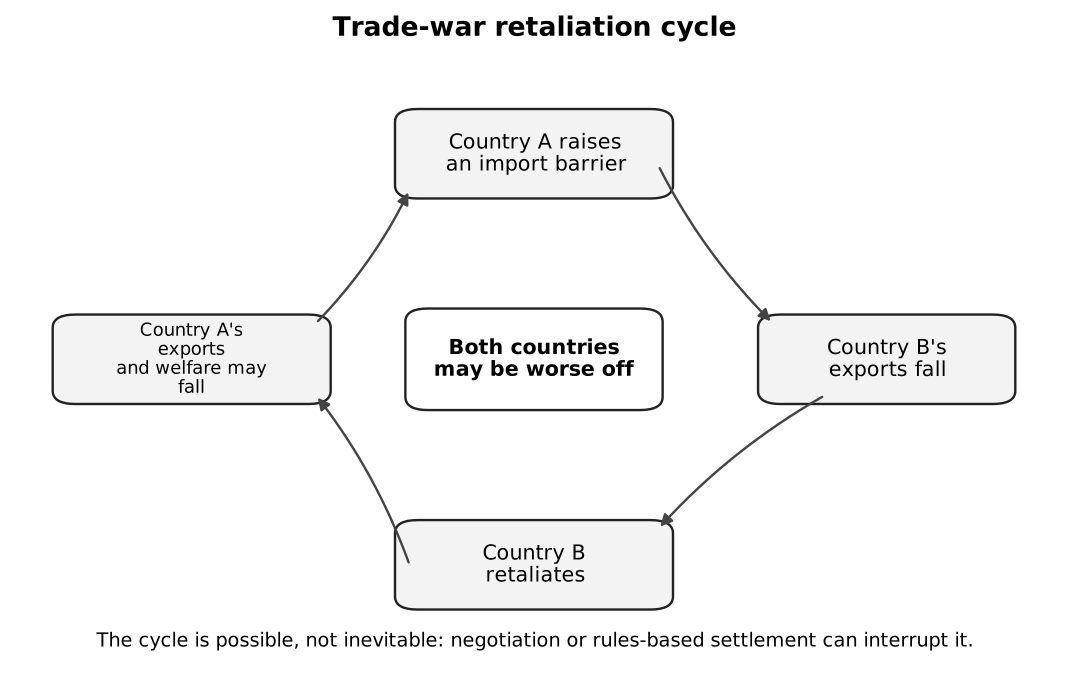
Caption: The arrows show a conditional feedback loop: Country A raises a barrier, reducing Country B’s exports; B may retaliate; A’s exporters and welfare may then fall. The centre states the possible joint result. Retaliation is not inevitable, but when both governments protect defensively, both can end with less trade and lower welfare than under cooperation.
Rules and dispute settlement can help governments resist domestic lobbying and avoid repeated retaliation.
Enrichment: depreciation and the J-curve
A depreciation tends to make exports cheaper in foreign currency and imports dearer in domestic currency. Trade balance depends on export/import demand elasticities, supply capacity, imported inputs, contracts and time.
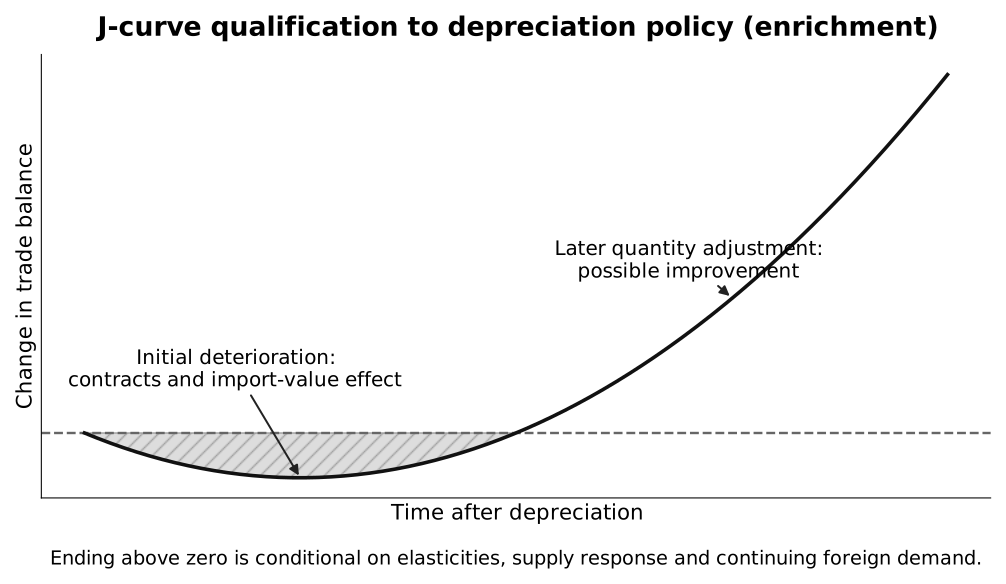
Caption: The vertical axis is the change in trade balance relative to its starting level. Immediately after depreciation, quantities may be fixed by contracts while the domestic-currency import bill rises, pushing the balance below zero. As buyers and producers adjust, export volume may rise and import volume may fall. The curve ends above zero only if eventual quantity responses and supply capacity are strong enough; the improvement is conditional, not guaranteed.
Enrichment: export bans as two different shocks
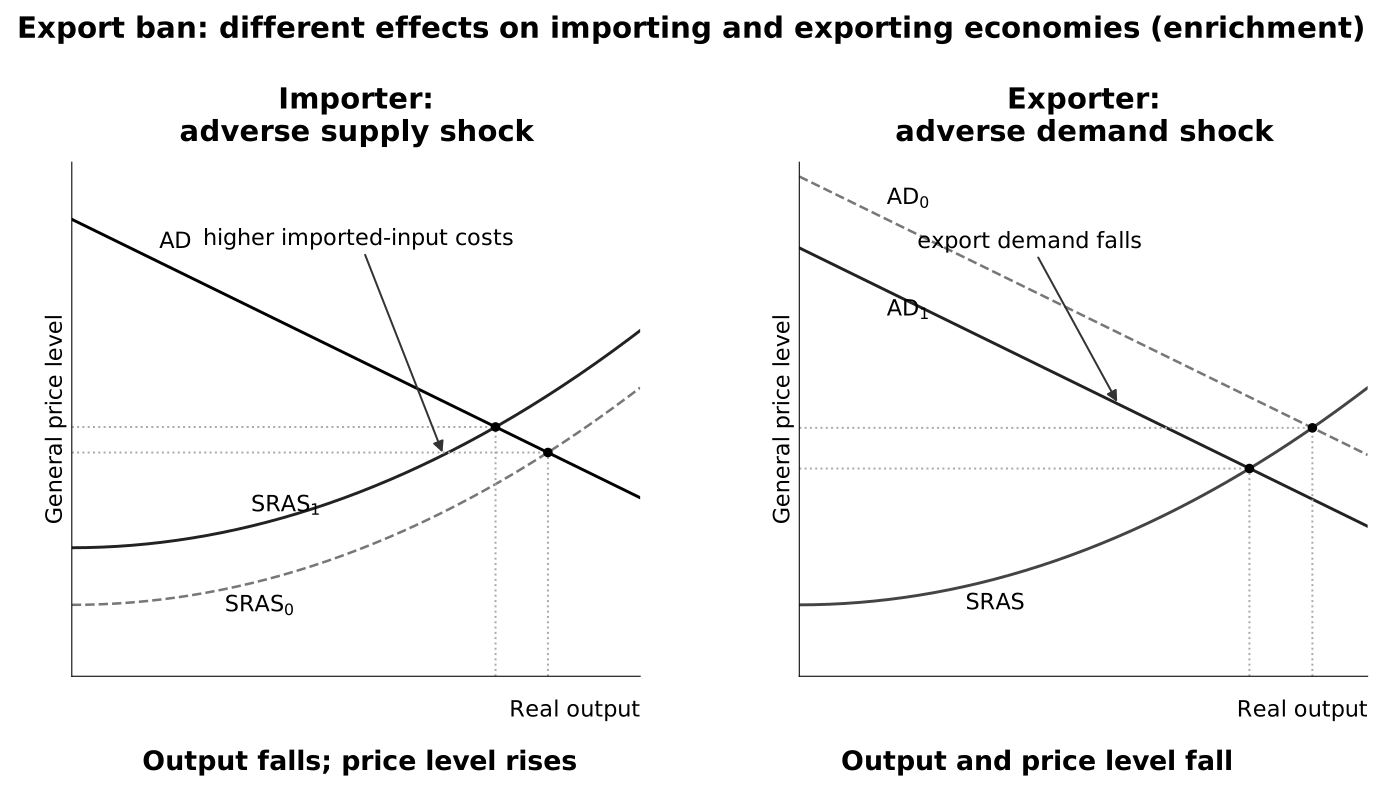
Caption: In the importing economy, scarcer imported food or inputs raises production costs, shifting SRAS left; the displayed equilibrium comparison gives a higher general price level and lower output. In the exporting economy, lost foreign demand reduces net exports and shifts AD left, lowering output and the general price level. Domestic redirection, substitution, stockpiles and policy responses can alter both results.
An export ban may lower the exporting country’s domestic price by redirecting supply at home, but it can reduce producer income and damage trading relationships. The importing country may diversify suppliers, release stocks, subsidise vulnerable households, or build long-run supply resilience rather than attempting costly complete self-sufficiency.
Evaluation checklist
Ask whether the objective is genuine and measurable; whether the instrument is targeted and temporary; who receives revenue or rent; whether imported inputs and retaliation matter; whether domestic supply can respond; and whether retraining, income support, externality pricing, procurement diversification or strategic stocks would achieve the goal at lower social cost.
Return to Globalisation and the International Economy.