Fiscal and Monetary Policy
Demand-management logic
Fiscal and monetary policies influence aggregate expenditure. Their effects depend on:
- the direction and size of the instrument change;
- how households, firms and financial institutions respond;
- multiplier leakages and time lags;
- the economy’s starting position on AS;
- confidence, expectations and policy credibility;
- external and fiscal constraints.
Always trace the transmission chain instead of naming a policy and jumping directly to growth or inflation.
Common transmission template
| Stage | Fiscal example | Monetary example |
|---|---|---|
| Instrument | government purchases rise | monetary conditions ease |
| First-round channel | direct increase in | borrowing cost, credit, asset price, exchange rate or expectations change |
| Expenditure response | planned domestic expenditure rises | , or may rise |
| Macro schedule | AD shifts right | AD shifts right; an exchange-rate change may also affect unit costs |
| Equilibrium outcome | output and GPL change according to the AS range | output and GPL change according to transmission strength and AS |
| Evaluation | multiplier, targeting, timing and fiscal space | confidence, indebtedness, bank response, elasticities and credibility |
Discretionary fiscal policy
Fiscal policy is the deliberate use of government expenditure and taxation to influence economic activity and living standards.
- Expansionary fiscal policy: increase to raise AD directly, or reduce taxes/increase selected transfers to raise disposable income and private spending.
- Contractionary fiscal policy: reduce , raise taxes or reduce selected transfers to restrain spending.
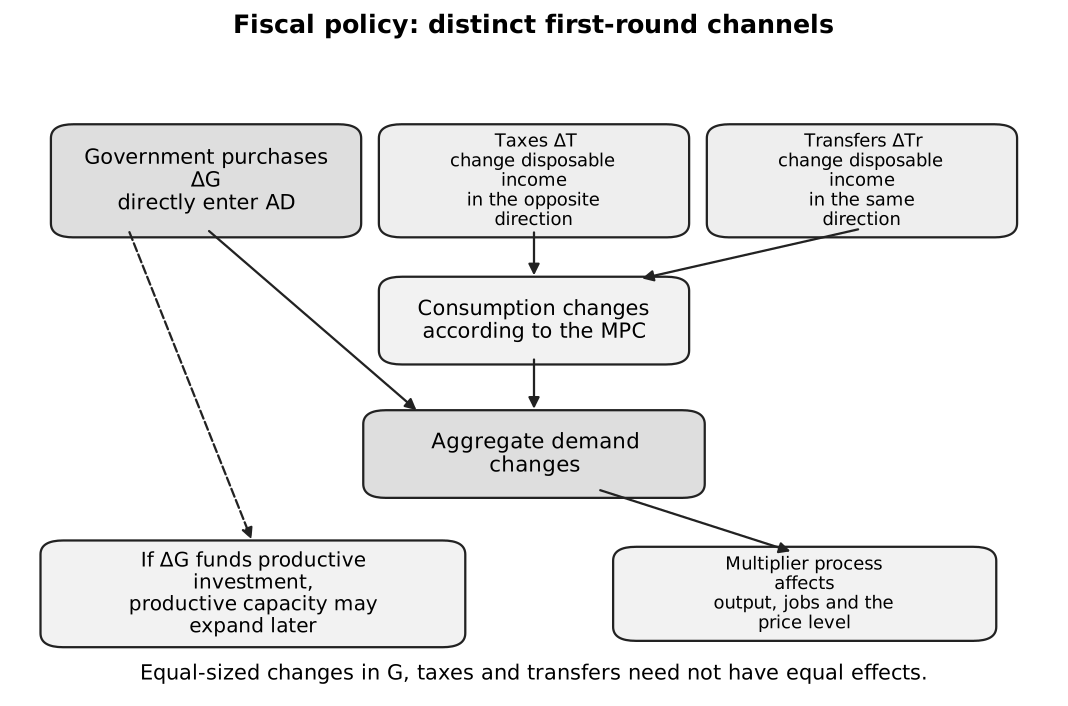
Caption: Follow each top box separately. A purchase of current output changes directly; taxes and transfers first alter disposable income and only the resulting consumption change enters AD. The central AD box therefore receives unequal first-round impulses from equal-sized policy changes. Productive public investment has a further, later capacity channel if the project succeeds.
The figure is a compact transmission overview, not a claim that equal-sized changes in , taxes and transfers have equal effects. The sign of the instrument change and the marginal propensity to consume must be stated.
Government expenditure
An increase in government purchases directly raises the component of AD:
Induced consumption produces a multiplier effect. If expenditure improves infrastructure, education, health or productive capacity, it can also raise AS later. This supply effect is not automatic: the project must be well selected and implemented.
Taxes
A personal-income-tax cut raises disposable income, but households may save or spend on imports. Only the increase in consumption enters AD. Therefore an equal-sized tax cut normally has a smaller initial AD effect than an equal increase in government purchases.
Business-tax changes can affect retained profit, investment incentives and location decisions, but their effect depends on expected demand, policy stability and whether tax is the binding constraint.
Equal-sized and tax changes are not equivalent
Suppose government purchases rise by $100 million. The first-round increase in AD is $100 million. If instead personal taxes fall by $100 million and households spend of the additional disposable income on domestic output, the first-round consumption increase is only:
Later multiplier rounds apply to the relevant initial domestic-expenditure change. This stylised comparison holds other behaviour constant; actual effects depend on targeting, saving, imports and expectations.
Transfer payments and inclusive growth
Transfer payments include unemployment benefits, pensions and targeted income support. They are not payments for currently produced output and therefore do not enter the component of AD directly.
Instead:
Targeted transfers can reduce post-transfer inequality and support inclusive growth. Their multiplier may be relatively strong when recipients have a high marginal propensity to consume. Evaluation must still consider targeting errors, work incentives, fiscal cost and whether supply is able to respond.
Budgets, automatic stabilisers and fiscal stance
The syllabus requires understanding of discretionary fiscal policy, budget deficits and surpluses, and long-run fiscal sustainability. Automatic stabilisers and structural-budget interpretation are useful supporting enrichment from the teacher anchors.
A budget deficit occurs when government expenditure exceeds revenue; a budget surplus occurs when revenue exceeds expenditure.
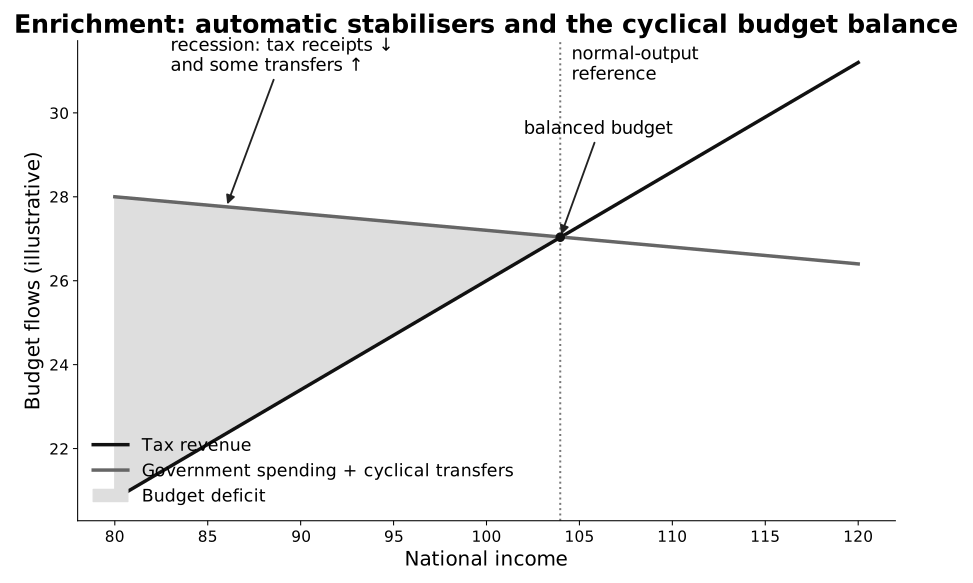
Caption: National income is on the horizontal axis. Tax revenue rises with income. Discretionary government purchases are held fixed, but the plotted expenditure line also includes cyclical transfers, which rise automatically as income falls; it therefore slopes down slightly. Their intersection is a balanced budget. Moving left during recession both lowers tax receipts and raises some transfers, creating a cyclical deficit while cushioning disposable income. The graph does not by itself identify a discretionary policy change.
Keep three statements separate:
- the headline budget balance is observed revenue minus expenditure;
- the cyclical component changes automatically as national income changes;
- the structural balance is an estimate of the underlying position after removing cyclical effects.
Therefore, “the budget moved into deficit” does not prove that the government deliberately adopted expansionary fiscal policy.
Enrichment: automatic versus discretionary change
- Automatic stabilisers respond without a new policy decision. Recession reduces tax receipts and raises some transfer payments; expansion does the reverse.
- Discretionary fiscal policy changes tax or expenditure settings deliberately.
The cyclical budget balance changes with the state of the economy. The structural balance estimates the budget position after removing cyclical effects. A headline deficit alone therefore does not prove that discretionary policy is expansionary.
Fiscal sustainability
Fiscal sustainability means the government can continue meeting expenditure and debt obligations without implausibly large future tax increases, spending cuts, inflationary finance or default.
Relevant conditions include:
- initial debt and debt-service burden;
- interest rate relative to nominal income growth;
- whether borrowing is temporary or persistent;
- whether expenditure raises future productive capacity and revenue;
- currency and maturity of debt;
- investor confidence and the government’s revenue base.
A deficit during a severe recession may support recovery and prevent deeper fiscal damage. Persistent structural deficits used for low-return expenditure are more concerning.
Crowding out
Government borrowing may raise demand for funds or expectations of future taxes, reducing private investment. Crowding out is less likely when resources and saving are idle, monetary conditions accommodate fiscal expansion, and public investment complements private activity. It is more likely near full capacity or when financing costs and risk premiums rise.
Monetary policy through interest rates
An easing of interest-rate conditions can operate through several parallel channels:
- lower borrowing cost and saving reward may raise consumption;
- a lower required return may make more investment projects profitable;
- asset prices and collateral may strengthen spending and credit;
- lower returns may weaken the currency and raise net exports;
- credible policy may improve confidence and expected demand.
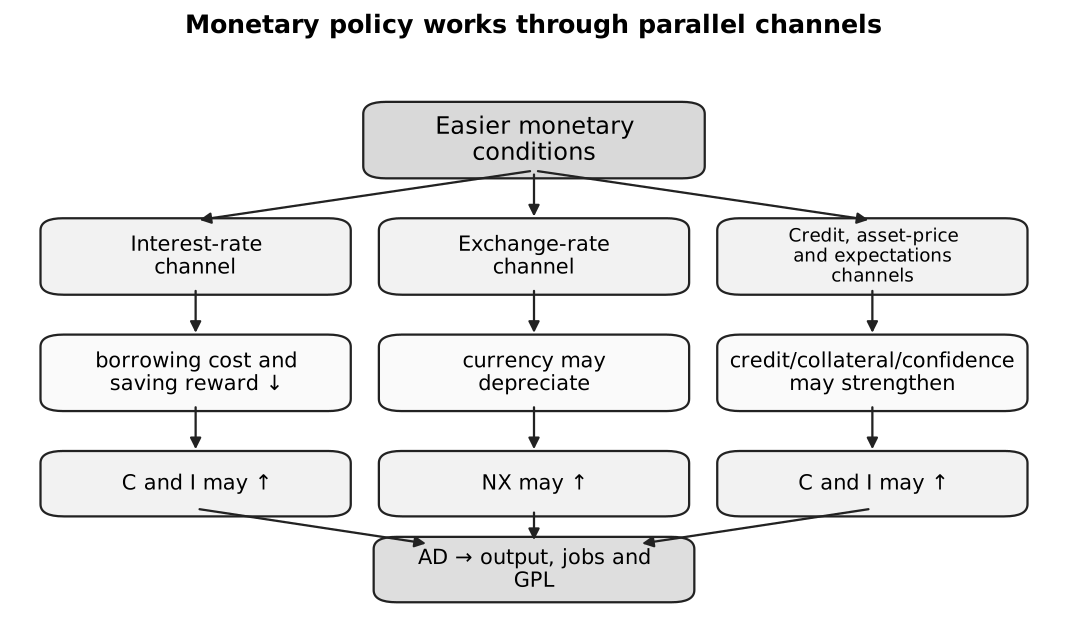
Caption: Read the diagram as parallel channels rather than one guaranteed chain. Easier conditions may lower borrowing costs, move the currency, strengthen credit or asset prices, and alter expectations. These intermediate changes affect , and before AD changes; any weak link can reduce the final output effect.
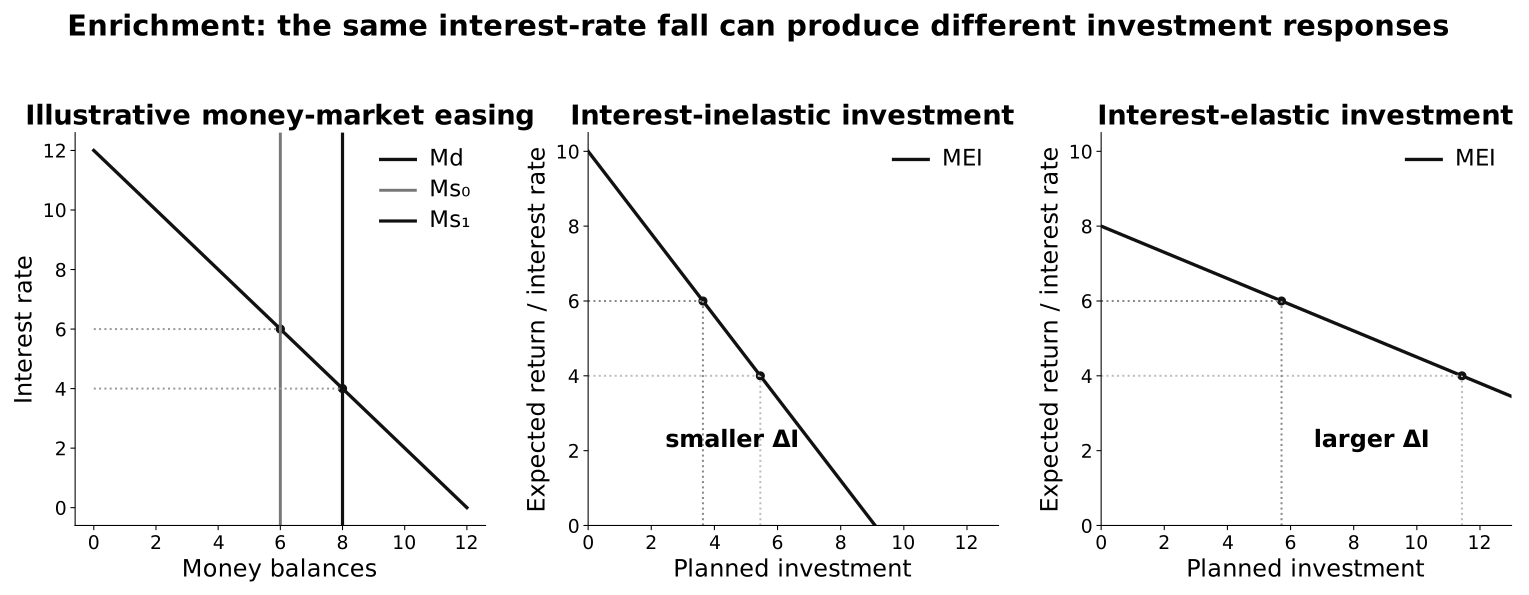
Caption: The money-market panel provides the illustrative interest-rate fall. The two MEI panels then apply the same rate change to schedules with different slopes: the flatter, more interest-elastic schedule produces the larger investment response. This is a sensitivity comparison, not a claim that the policy controls investment directly.
Transmission is weak when households are highly indebted and deleverage, firms are pessimistic, banks restrict credit, investment is interest-inelastic or rates are already very low.
Singapore’s exchange-rate-centred monetary policy
Singapore is a highly open economy with substantial imported consumption and intermediate inputs. Monetary policy therefore gives central importance to the exchange rate against a trade-weighted basket of currencies rather than relying mainly on a domestic policy interest rate.
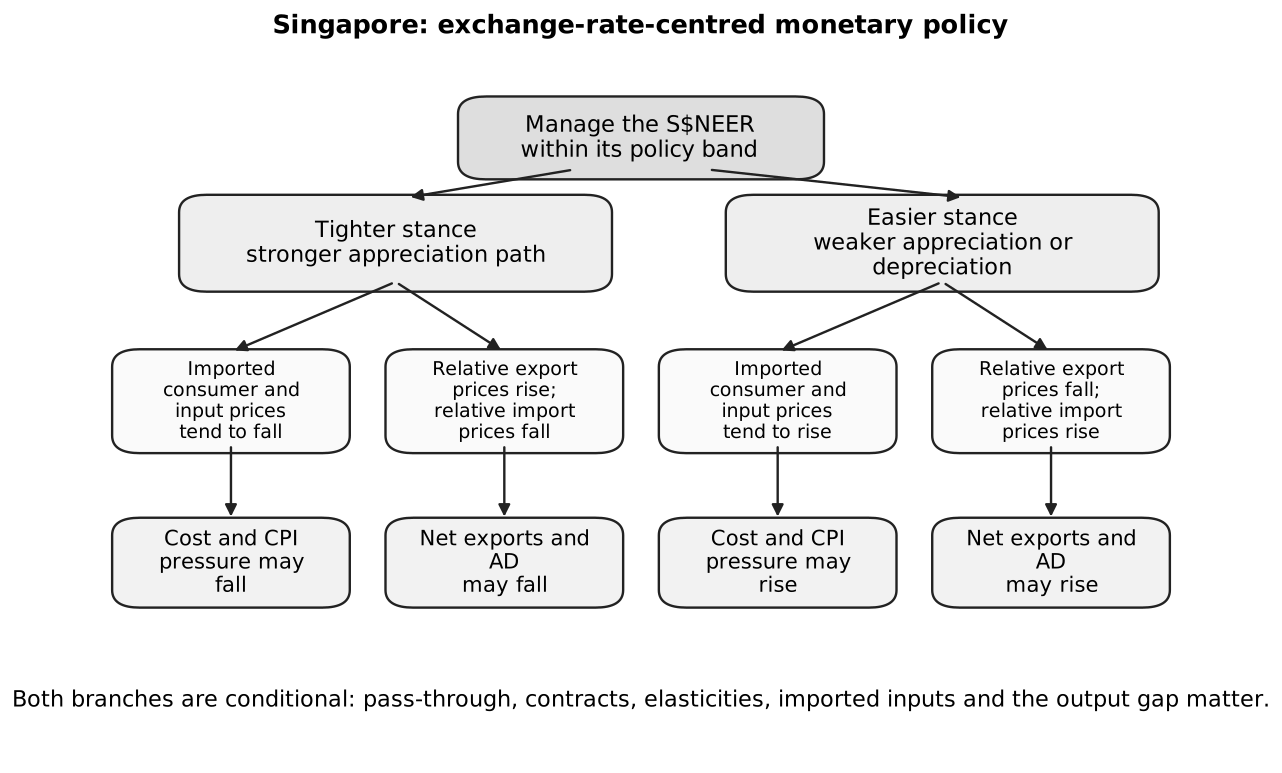
Caption: Begin with the managed S$NEER stance, then read the two parallel branches within each policy column. One branch runs through imported consumer and input prices to cost and CPI pressure. The other runs through relative export and import prices to net exports and AD. The trade effect does not occur because CPI changed; both effects originate from the exchange-rate stance. Their magnitudes remain conditional on pass-through, contracts, elasticities, imported-input use and the output gap.
Appreciation-oriented tightening
At the same time, exports become relatively dearer to foreign buyers and imports cheaper relative to domestic goods, tending to reduce and AD. The strength depends on pass-through, demand elasticities, contracts and imported-input use.
Depreciation-oriented easing
A weaker exchange-rate path can support export competitiveness and imported demand switching, but raises domestic-currency import prices and may intensify cost-push inflation.
The policy framework is managed rather than a permanently fixed bilateral rate. The authority can adjust the path and permitted range of the trade-weighted exchange-rate band according to inflation and growth conditions. Detailed institutional operations are not required for the core argument.
Comparing fiscal and monetary policy
| Criterion | Fiscal policy | Interest-rate or exchange-rate monetary policy |
|---|---|---|
| Directness | Government purchases affect AD directly | Works through private decisions and financial/external channels |
| Targeting | Can target sectors, regions and income groups | Generally broad, though exchange-rate effects differ across sectors |
| Speed of decision | May face political and administrative delay | Can often be adjusted more quickly |
| Speed of effect | Direct spending can be powerful but projects take time | Financial variables move quickly, real expenditure responds with lags |
| Main constraints | Debt, fiscal sustainability, crowding out, implementation | Confidence, debt, bank transmission, elasticity and external conditions |
| Supply effects | Productive public spending may raise AS | Usually mainly demand-side; exchange rates also affect imported costs |
Choosing the stance
- In a deep recession with weak private confidence, direct temporary fiscal spending may be more reliable.
- When inflation is demand-driven and expectations are responsive, tighter monetary conditions may be quicker and easier to reverse.
- In an import-dependent economy facing imported inflation, appreciation can be relatively targeted but harms trade-exposed demand.
- Near full capacity, expansionary demand policy is more inflationary.
- Where the problem is structural, demand management should be combined with supply-side measures rather than used alone.
Time lags and uncertainty
Distinguish:
- recognition lag: time to identify the problem;
- decision lag: time to authorise a response;
- implementation lag: time to change spending, taxes or financial conditions;
- impact lag: time for households, firms and trade flows to respond.
Policies based on backward-looking data can become pro-cyclical if conditions change before the full effect arrives.
Common pitfalls
- Treating a tax cut as the same-sized direct injection as an increase in .
- Counting transfer payments inside the component of AD.
- Calling every deficit discretionary expansion.
- Claiming government borrowing always crowds out private investment fully.
- Moving directly from a lower interest rate to higher AD without explaining , , credit or .
- Describing Singapore’s monetary policy only as interest-rate policy.
- Assuming exchange-rate appreciation lowers inflation without any output or trade-off effect.
- Ignoring the starting AS range and fiscal sustainability.
Exam-ready judgement
Choose policy according to the source and time horizon of the problem. Then compare speed, transmission reliability, distribution, fiscal or external constraints, and side effects. A coordinated package can be effective, but excessive joint expansion near capacity creates inflation and import pressure.
Return to Macroeconomic Objectives and Policies.